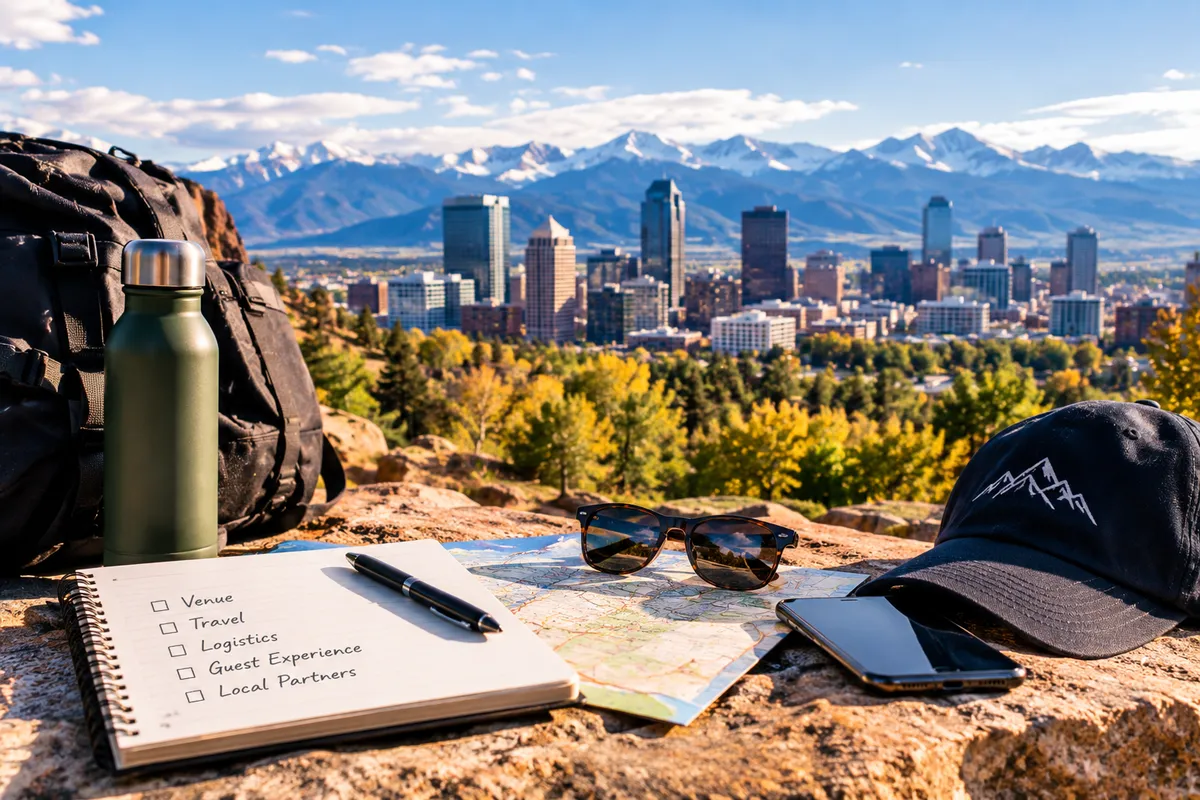
The Corporate Event Planner's Insider Guide to Denver: Seasons, Altitude, and the Mistakes Out-of-Town Teams Make
Denver is one of the best cities in the country for corporate events. It has a major airport hub, a lively downtown, and the Rocky Mountains as a backdrop. It also has a few quirks that catch out-of-town planning teams off guard every year.
As a Denver corporate event planner, we see the same avoidable mistakes over and over. Here is what every team should know before bringing an event to the Mile High City.
1. Altitude Is Not a Fun Fact. It's a Planning Factor.
Denver sits at 5,280 feet. For many attendees flying in from sea level, that means faster dehydration, fatigue, and alcohol that hits harder than they expect, especially on the first night.
What a good Denver event planner does about it:
Puts water stations everywhere, not just at the bar
Avoids scheduling the heaviest drinking event on arrival night
Plans lighter programming for the first morning
Reminds attendees about sun protection, because the UV is stronger at elevation
These small details decide whether your attendees are sharp and engaged on day two, or tired and dragging.
2. Colorado Weather Doesn't Read the Forecast
Denver is famous for its sunshine, but the weather changes quickly. Snow in April and May is common. Summer afternoons often bring sudden thunderstorms. A beautiful rooftop reception can turn chaotic in about twenty minutes.
Every outdoor element of a Denver corporate event needs a real backup plan. That means a confirmed indoor alternative, tenting that can handle wind, and a clear decision time for when to make the call. "We'll figure it out" isn't a weather plan.
3. The Airport Is Farther Than You Think
Denver International Airport is one of the busiest in the country, but it's a real drive from downtown. Out-of-town teams often underestimate transfer times, especially for large groups arriving on different flights.
Smart planning includes staggered shuttle schedules, clear arrival instructions, and, where it fits, using the train line that connects the airport to Union Station. First impressions start at baggage claim, not at the welcome reception.
4. Pick a Neighborhood, Not Just a Venue
Denver's event venues span very different settings, and the neighborhood shapes the whole attendee experience:
Downtown and LoDo: Close to Union Station, major hotels, and the Colorado Convention Center. Great for walkability and large groups.
RiNo (River North Art District): Industrial-chic warehouses, murals, and a creative energy that fits brand activations and product launches especially well.
Cherry Creek: A more polished, upscale feel for executive dinners and client appreciation events.
The Foothills and mountains: For teams that want the full Colorado experience, from Red Rocks to mountain retreats. Transportation and timing become much more important here.
Your venue choice should come from your goal. A sales kickoff that needs energy and connection calls for a different setting than an executive strategy offsite.
5. Book Earlier Than Feels Necessary
Denver's event calendar is busy. Conventions, concerts, sports, and peak tourist season all compete for the same hotel blocks and venues. For events with large attendance in late spring, summer, or early fall, starting to plan six to twelve months ahead isn't overcautious. It's standard. Timing also has a big effect on your budget; our Denver event pricing guide breaks down how.
6. Don't Waste the Location
The most common mistake isn't logistical. It's strategic. Teams bring an event to Denver and then hold it in a hotel ballroom that could be in any city.
Colorado gives you something few destinations can: a built-in sense of place. The best corporate events here use it on purpose. That can mean a sunrise hike before a leadership session, a locally sourced dinner that tells a Colorado story, or an activation designed around the mountains. When the setting supports your message, attendees remember both.
Why Local Expertise Matters
A corporate event planner in Denver who knows the city brings more than vendor contacts. They know which venues handle weather contingencies well, how long transfers really take, which dates conflict with major city events, and how to turn "Denver" from an address into part of your event's story. If you're comparing options, here's how to choose the right corporate event planner in Denver.
Frequently Asked Questions
What is the best time of year for a corporate event in Denver?
Late spring through early fall offers the most reliable weather and the most outdoor options, but it's also peak season. September is a favorite: warm days, cooler evenings, and fewer summer storms.
Do attendees really notice the altitude?
Many do, especially on the first day. Mild fatigue, headaches, and dehydration are common for visitors from sea level. Planning for hydration and a lighter first evening makes a noticeable difference.
Can we combine a Denver corporate event with a mountain experience?
Yes, and it's one of the best things about planning here. It just requires careful transportation planning and realistic timing, since mountain roads and weather add travel time.
Bringing Your Next Corporate Event to Denver?
HM Experiential is a Denver corporate event planning and brand activation firm that combines local knowledge with a strategy-first approach, so your event runs smoothly and delivers on its purpose. Start planning with us.